
 WhatsApp
 Call Us
 Contact Us
Seating is one of the most decisive elements in private aviation, shaping not only comfort but also functionality, safety, and the overall travel experience. From how many passengers a jet can accommodate to how seats are positioned, reclined, and customized, seating determines how private flying truly feels. This guide explores every critical aspect of private jet seating, including layouts, capacity, safety, luxury, and how the right configuration enhances both business and leisure travel.
How Private Jet Seating Redefines the Flying Experience
Unlike commercial aircraft, where rows are designed for density and uniformity, private jet seating is built around comfort, personalization, and spatial freedom. Each seat is crafted to serve both ergonomic and aesthetic purposes, offering more width, deeper recline, and often full rotation to accommodate conversation or work during flight.
The difference becomes evident the moment passengers step onboard. Seating is arranged not to maximize headcount, but to enhance movement, privacy, and social interaction. Materials such as hand-stitched leather, Alcantara, and lightweight composites are used not just for visual appeal but also to reduce aircraft weight without compromising strength.
This philosophy of private jet seating transforms the cabin from a transport vehicle into a multi-purpose airborne environment, equally suitable for rest, meetings, or leisure. It is this balance between design and functionality that separates private aviation from commercial travel entirely especially when paired with a thoughtfully designed private jet interior that aligns seating with lighting, acoustics, and cabin flow.
Understanding Passenger Capacity and Seating Limits
A major concern for buyers and charter clients is how many people an aircraft can realistically carry. This is where private jet capacity becomes an important operational concept. While manufacturers certify a maximum number of passengers, comfort and usability are often achieved at lower occupancy levels. Many travelers ask how many people can a private jet hold, but a better question is how many passengers can be seated comfortably without disrupting cabin flow or storage. For example, a jet certified for twelve may operate most efficiently with eight or nine when baggage, catering, and onboard service are considered.
The question of how many seats a private jet has is influenced by interior layout choices, galley placement, and whether the aircraft includes divans, sleeping areas, or workstations. Even if technically the number of people who can fit in a private jet may be higher, experienced operators always prioritize safety, balance, and cabin usability over theoretical limits.
This is also why private jet passenger capacity is best viewed as a comfort metric rather than just a numerical specification. Understanding this distinction allows travelers to choose aircraft that truly match their mission profile. For travelers considering long-term solutions such as a private jet lease, understanding these capacity nuances becomes essential to selecting the right aircraft for evolving travel needs.
Cabin Layouts and Seating Arrangements Explained
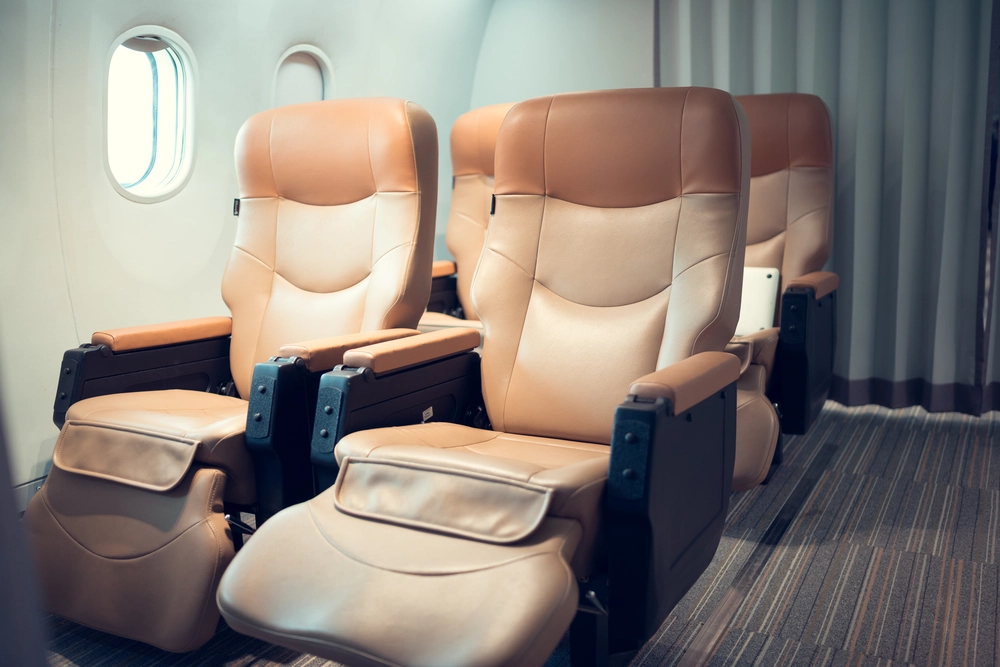
The way seats are arranged defines how the cabin functions during flight. A well-planned private jet seating arrangement supports movement, privacy, and interaction depending on the purpose of travel. Business-focused cabins often emphasize face-to-face seating for meetings, while leisure-oriented cabins prioritize recline and personal space.
The private jet cabin layout determines where passengers can relax, work, dine, or sleep, and how smoothly they transition between these activities. In many aircraft, seating zones are separated into social areas and quiet zones, allowing productivity and rest to coexist without interference.Every layout is a compromise between passenger count, comfort, and operational weight limits, making layout planning one of the most critical phases in aircraft interior design.
This design complexity becomes more pronounced in larger jets, where seating integrates with conference tables, private suites, and lounge areas. For long-range aircraft, Bombardier’s Global series provides a strong benchmark for cabin seating innovation and layout efficiency.
Seating by Jet Category and Practical Selection
The category of aircraft directly influences how seating behaves in flight. In light jets, seating is compact and optimized for short routes, where simplicity and efficiency take precedence over spatial luxury. In midsize jets, seats become more adjustable, often featuring swivel mechanisms and deeper recline suitable for longer flights.
In heavy and ultra-long-range jets, private jet seating reaches its most advanced form, with lie-flat beds, private suites, and multi-zone cabins. These aircraft allow passengers to dine, sleep, and work without spatial compromise.
A well-structured private aircraft seating guide considers not only how seats look, but how they perform across flight phases, including taxi, takeoff, cruise, and landing. For serious buyers and frequent flyers, reviewing the jet seating chart before confirming a flight ensures expectations align with the actual cabin configuration.
This becomes particularly important when comparing private jet seats across different manufacturers, as two aircraft in the same class may offer entirely different seating experiences due to layout philosophy and design priorities, something every client should assess before choosing to buy private jet ownership.
Safety, Certification, and Structural Integrity of Seating
While luxury often dominates discussion, every seat onboard a private aircraft must comply with strict aviation safety standards. From impact resistance to fire retardancy, seating must perform reliably under extreme conditions.
According to FAA regulations, aircraft seats must withstand forces of up to 16g during impact scenarios and remain structurally intact to protect occupants.
This is where private jet seating becomes a blend of design and engineering. Lightweight materials are used not just for aesthetics but to maintain aircraft performance, while seat frames are engineered to absorb impact energy without compromising cabin integrity.
These certifications ensure that even the most luxurious seating arrangements remain compliant with global aviation safety protocols, reinforcing that beauty in aviation must always be supported by structural discipline.
Luxury, Customization, and the Complete Flight Experience
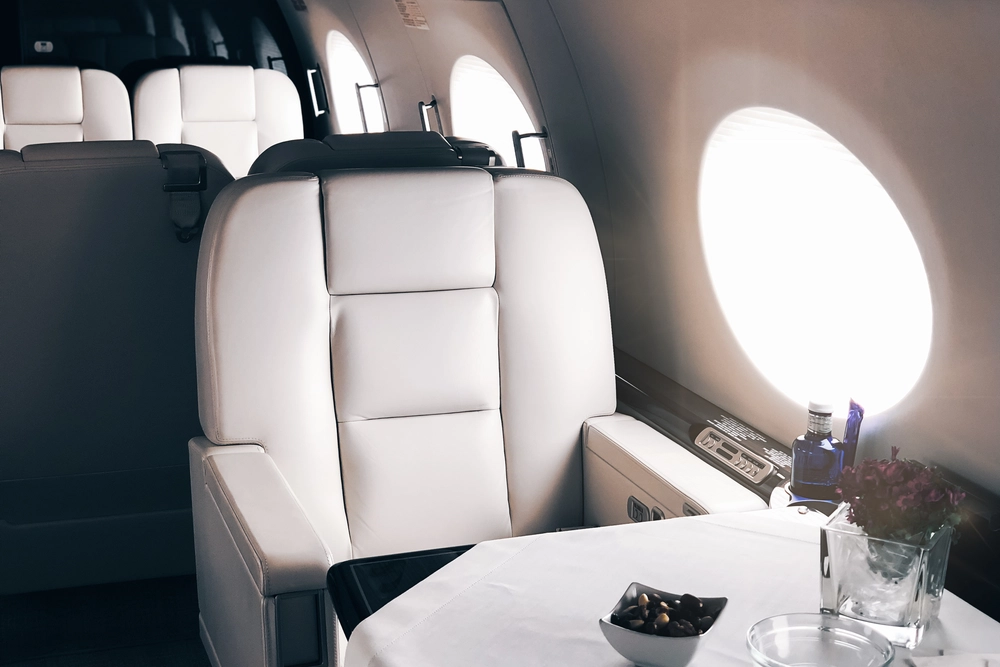
The modern traveler increasingly expects customization in every aspect of flight, and seating is no exception. Today’s luxury private jet seating offers adjustable firmness, climate-controlled cushions, integrated massage functions, and smart connectivity.
Aircraft owners can now select bespoke private jet seat options that align with brand identity, whether minimalist, contemporary, or classically opulent. This level of personalization has made seating a core part of aircraft valuation and resale appeal.
Seating also plays a defining role in shaping the emotional side of flying. Combined with curated gourmet food services, the cabin becomes a personal space rather than just a mode of transport.
Conclusion
The importance of private jet seating extends far beyond how many people can sit onboard. It defines comfort, safety, operational efficiency, and the emotional experience of private flying itself. From certified structural performance to handcrafted luxury finishes, seating is where engineering meets lifestyle.
Whether you are chartering, leasing, or owning, understanding seating allows smarter aircraft selection and ensures every flight delivers on both comfort and capability. With the right seating configuration, private aviation becomes not just faster than commercial travel, but infinitely more refined. At RightJet, we help clients navigate these choices with expert guidance, access to a global fleet, and tailored solutions that ensure every seat onboard matches your expectations of luxury, performance, and safety.