 WhatsApp
  Phone Call
 Email
Email 



Air Ambulance Aircraft Management Aircraft Sales and Acquisition Global Destinations helicopter charter Jet Charter Lifestyle Market Insights Rightjet Journal Specialized Air Cargo Tips
Tips |
July 9, 2026
London City Airport Private Jet Restrictions: What to Know

AI Quick Summary
London City Airport private jet restrictions include specific operational rules covering runway length, steep 5.5-degree approach certification, noise compliance, operating hours, and coordinated slot allocation. Only aircraft like the Embraer Phenom 300, Praetor 500, Cessna Citation CJ4, Bombardier Challenger 350, and Pilatus PC-24 typically qualify. Understanding London City Airport private jet rules helps travellers avoid delays, extra fees, and last-minute diversions to alternative London airports.
London City Airport private jet restrictions are a set of rules, and at first, it can feel a bit tricky. They matter a lot if you’re planning to fly in for business or pleasure.
A lot of people assume that because the airport is so close to the city centre, it’ll be workable for almost any private aircraft, but unfortunately, that is not the case. It’s popular, it’s convenient, but there are operating limits and restrictions you should abide by strictly.
While researching private aviation, I’ve found that London City Airport is one of the most interesting airports because its central location comes with unique operational challenges. Every time I review its regulations, I’m reminded that choosing the closest airport isn’t always the simplest option for private jet travellers. As of 2026, London City Airport is a perfect example of why careful flight planning matters.
What Are London City Airport Private Jet Restrictions?
Aviation, whether private or not, goes through many policies and customs. London sits among the busiest private aviation regions worldwide, and London City Airport’s private jet restrictions are often misunderstood by travellers looking for luxury or executive flights. The location is a huge win for businessmen and high-net-worth passengers. Still, these operational boundaries mean not every private aircraft can just arrive there and then, and there are rules you should abide by.
If you’re planning a private flight into London from Dubai or anywhere, get comfortable with the private jet restrictions at London City airport, so you can avoid delays, unexpected extra fees, and that tense moment when you have to divert to another London airport at the very last minute.
As of 2026, London City Airport private jet restrictions are the operational conditions that decide which aircraft can land, when arrivals are permitted, and how the departure flow has to happen.
In practice, these restrictions usually cover:
- Aircraft performance
- Noise certification
- Operating hours
- Runway length
- Steep approach capability
- Slot allocation
Also, unlike a lot of larger international airports, London City Airport was created for comparatively compact commercial aircraft, operating in a dense city setting.
Why Does London City Airport Have Strict Restrictions?
The airport is only a few miles from London’s financial district. It’s also hemmed in by neighbourhoods and office blocks, so everything has to stay tightly managed. That means the airport authorities have to balance access with environmental and safety concerns, which is where the strictness comes in.
As per guidance from the UK Civil Aviation Authority (CAA) and London City Airport, these measures are intended to:
- Reduce aircraft noise
- Keep safe operations consistent
- Limit environmental effect
- Manage congestion
- Protect nearby communities
These London City Airport private jet restrictions have been around for years, and they keep shifting as aviation technology improves, so what worked last season might not feel the same now.
Which Private Jets Can You Use At London City Airport?
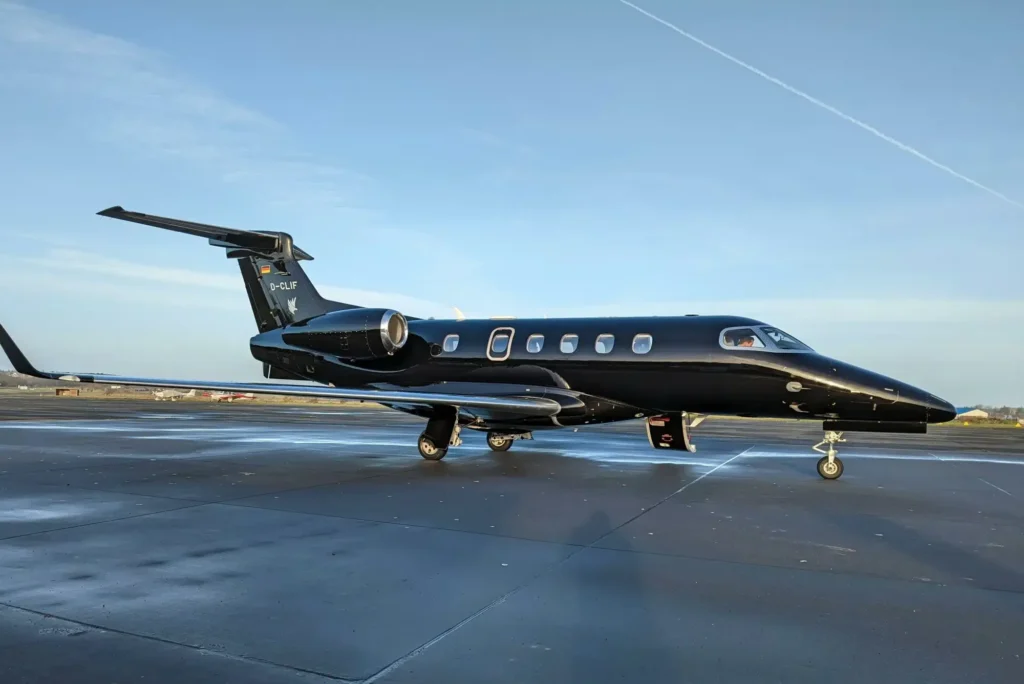
Under London City Airport private jet rules, an aircraft typically needs the right certification for that airport’s well-known 5.5-degree steep approach, which is noticeably different from the more standard 3-degree approach you might see at other airports.
Commonly approved aircraft include:
- Embraer Phenom 300
- Embraer Praetor 500
- Cessna Citation CJ4
- Bombardier Challenger 350
- Pilatus PC-24
And some bigger jets basically can’t operate there, mainly due to runway performance constraints. If you are unsure about which aircraft to pick, read this Boeing vs Airbus Private Jet Comparison and pick the one based on your needs.
What Are the Runway Restrictions?
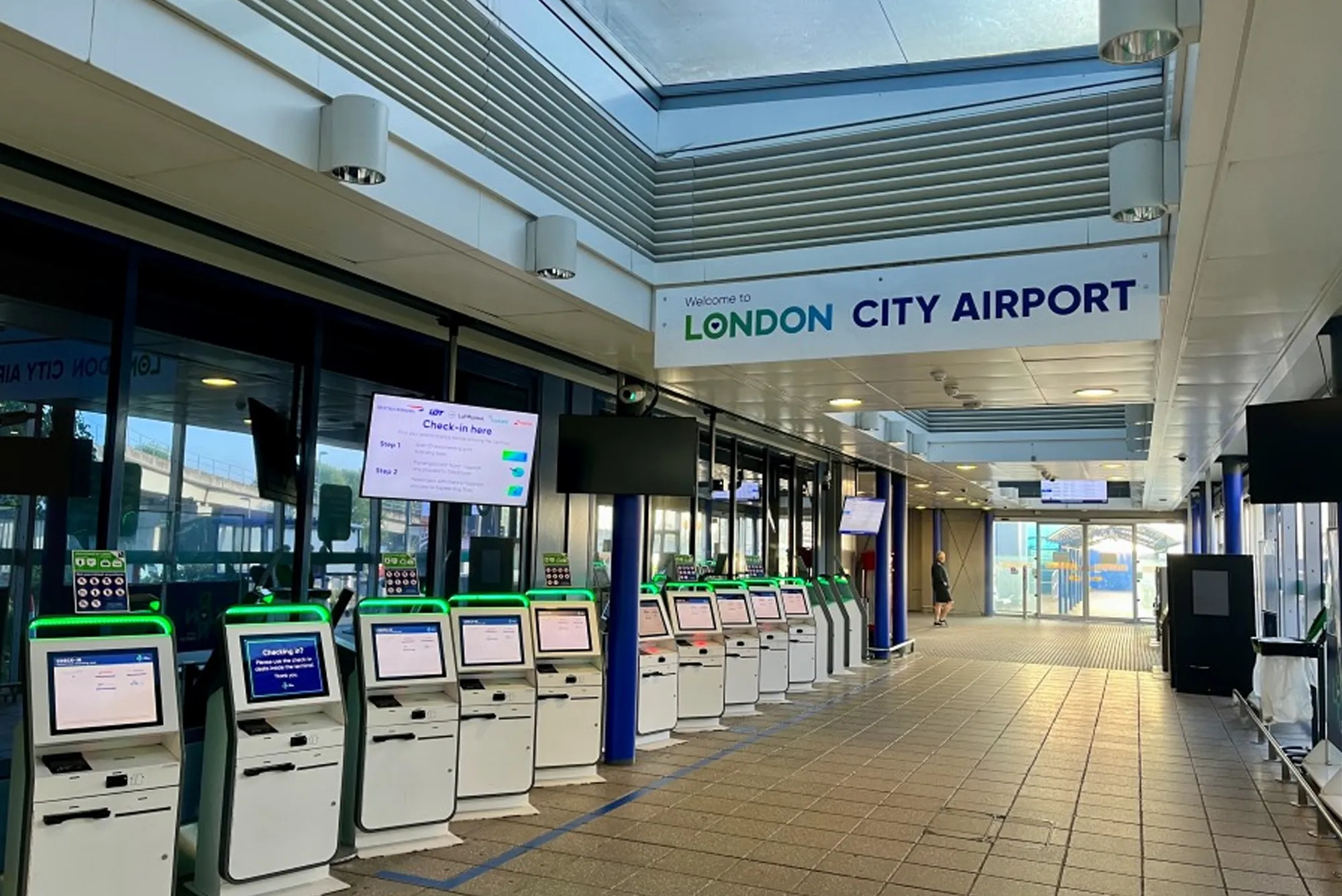
London City Airport runway length is about 1,508 meters (4,948 feet). And when you compare it with somewhere like Heathrow or Stansted, it can feel short; that gap usually causes a domino effect on things like Maximum takeoff weight, Passenger load, Fuel capacity, and even Aircraft range.
So basically, long-haul jets may need more careful fuel planning, or passenger numbers get reduced a bit so the aircraft can still depart safely without pushing limits too hard.
Operating Hours Restrictions
London City Airport isn’t the kind of place that runs like a big 24/7 machine. It doesn’t operate all the time. Most of the operating windows usually look like this, and the following are the London City Airport jet limitations for time;
Day → Operating Hours
Monday–Friday → 06:30–22:30
Saturday → limited daytime operations
Sunday → reduced operating hours
Night flights are also heavily restricted, mostly because of local noise rules. So if you’re going in for business and want private jet access at London City airport, it’s smart to line up earlier arrival times, because slot conflicts can appear without a lot of notice.
Slot Availability Can Be a Bigger Challenge
Even if your aircraft is technically approved under London City Airport private jet restrictions, you still don’t automatically get a slot. London City Airport uses coordinated slot management since demand often outstrips what the airport can support at any single moment.
Most private charter operators try to arrange slots ahead of time, but in real life, you still need flexibility during busier windows. And once peak business seasons roll in, slot availability can tighten up pretty quickly, like faster than people expect.
How Do Noise Regulations Affect Private Jets?
Noise restrictions are probably one of the most important London City Airport private jet restrictions, no debate. To get cleared for operations, the aircraft needs to meet strict international noise standards. Some older, louder business jets may simply not qualify, even if the rest of the setup looks fine.
At the same time, newer aircraft often perform better here, thanks to quieter engines, upgraded aerodynamic design, and stronger climb performance. The aviation industry keeps pushing for quieter aircraft technology because environmental requirements keep getting more demanding, year after year.
Which Travellers Benefit Most from London City Airport?
It tends to fit well for corporate executives, financial professionals, government delegations, time-sensitive business meetings and VIP passengers travelling to London City Airport on small jets. Also, because the airport is so close to Canary Wharf and Central London, you can cut down on ground time compared to the larger airports. less road time, more in time momentum.

How Charter Operators Handle London City Airport Private Jet Restrictions?
Experienced charter companies like RightJet typically manage these London City Airport approach restrictions before they finalise anything. Their internal process often includes
- Aircraft eligibility verification
- Slot coordination
- Flight permit review
- Weight calculations
- Weather assessment
- Crew qualification checks
In most situations, passengers don’t have to touch these technical steps themselves, which is a relief, as Aircraft management can be complicated for anyone outside the aviation industry.
Alternative London Airports for Private Jets
If your aircraft can’t operate and you are facing private jet operations difficulty, then there are a few common options, such as:
- Farnborough Airport – good for premium business aviation and VIP travellers
- Biggin Hill Airport – a common choice for executive and corporate flights
- London Luton Airport – usually strong for long-range private jets and international charters
- London Stansted Airport – more flexibility for bigger business aircraft
- London Heathrow Airport – best when you need commercial airline connections
Before choosing London City Airport, charter operators usually assess, at least:
- Aircraft type and certification
- Runway performance requirements
- Passenger capacity
- Fuel requirements
- Slot availability
- Noise compliance
- Ground transfer time to your destination
Conclusion
Understanding London City Airport’s private jet restrictions helps travellers pick the right aircraft, dodge scheduling problems, and plan smoother business aviation trips. Limits tied to runway length, steep approach certification, operating hours, noise compliance, and slot availability all influence whether London City is the best choice.
Working with a charter provider like RightJet, which knows the process, ensures operational needs are handled before departure. That way, passengers can focus on travel plans instead of airport logistics.
Our team helps clients with private jet charter, aircraft selection, airport planning, and regulatory coordination, so each private flight stays as efficient as possible.
Don’t wait up and contact us today to book your next charter!
FAQs
Q: Is London City Airport open 24 hours?
A: No. The airport has restricted operating hours and reduced weekend availability.
Q: Can every private jet land at London City Airport?
A: No. Only aircraft certified for the airport’s operational requirements, plus the steep approach capability.
Q: Why is the approach steeper than at other airports?
A: A steeper approach helps maintain obstacle clearance while lowering the impact on nearby communities, environmentally speaking.
Q: Are private jet slots difficult to obtain?
A: During peak business periods, yes. Planning tends to improve availability a lot.
Q: Which airport is better if my aircraft cannot use London City?
A: Farnborough, Biggin Hill, Luton, or Stansted are often recommended depending on your aircraft and itinerary.